- Insight Bites
- Posts
- Insight Bites Week 9 | 17/10/23
Insight Bites Week 9 | 17/10/23

Edwin Dong
October 17, 2023

IN THIS ISSUE
7 min read
If you want to achieve your goals, or maybe something greater and more ambitious, you must understand that your daily routine is very important. You need a meaningful system that could help you make progress.
Last week we learned about the importance of creating a system optimized for productivity. We’re going to discuss some additional tips for productivity in today’s newsletter:
📈 Are goals useful?
✅ The 5 to thrive, 3 to free, and 2 to do
⌚ Time Blocking
📅 “Tommorow” List

GOALS ARE NOT WHAT YOU THINK THEY ARE
Scott Adams, the creator of Dilbert, said,
"Goals are for losers; systems are for winners."
Goals can be appealing, yet there's a significant degree of truth in his statement. The issue with setting goals is that when we put them in writing, it can deceive our minds into believing we're genuinely doing something productive. Certainly, goal-setting often provides a short-term dopamine boost, delivering a sense of gratification.
However, over time, that satisfaction diminishes, and we find ourselves essentially back where we started. If you've experienced this, please don't be too hard on yourself; it's a common experience we've all encountered. More importantly, it's not your fault because the game we've been taught is rigged against us from the start.
Setting goals can be counterproductive because they often fixate on the end result, which could be really far off in the future. Take, for instance, a goal of losing 15 pounds by the end of the year.
In this scenario, you can only determine success or failure either at the end of the year or when you've actually lost those 15 pounds. The reality is that losing 15 pounds is challenging and a long process; it doesn't happen overnight. So, if you can only ever measure progress at the end, then, if you're like most people, you're probably just going to burn out and give up.
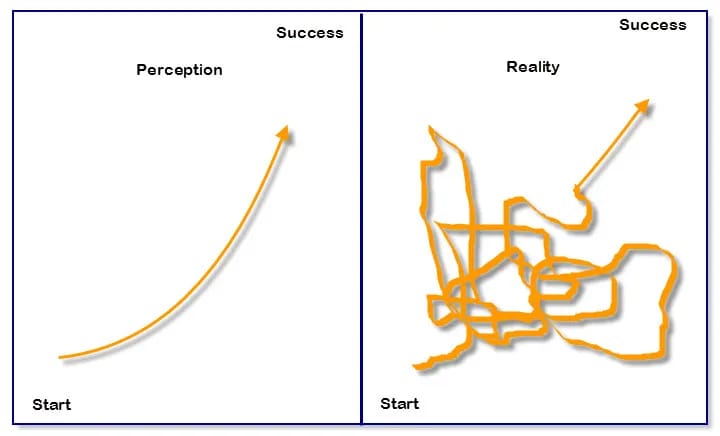
Millionaires and successful people, they don't fall into this trap. Instead of focusing on the outcomes, they focus on the process. I'm not saying that millionaires don't set goals; that's not true; they do. But they also create something which psychologists refer to as an implementation intention. The simplest form of an implementation intention is to simply state, "What are you going to do, and when are you going to do it?"
Implementation intentions are critical because they specify the daily actions that you need to perform to achieve your desired result. If you’re feeling lost, here’s a template of implementation intention:
We’re going to make a two-part system. Part one is priority setting, and part two is time blocking. First, we're going to set our daily priorities, which should be pretty straightforward if you've already implemented a priority management system using something like the ICE method we talked about before to organize your second brain.
(If you don’t know what that is, feel free to read last week’s newsletter or read this short article: https://growthmethod.com/ice-framework/)
5 TO THRIVE, 3 TO FREE, 2 TO DO
Each day, we're going to take those tasks we've deemed most important and create our 5-to-Thrive, 3-to-Free, and 2-to-Do lists. Let's start with the 5-to-Thrive. These are five tasks that you deem the absolute most important for the next month, quarter, or year. Your timelines may vary depending on the type of goal, but generally, try to limit your number of top-priority goals to five. Any more than that, and you're probably not going to make any meaningful progress towards any of them. We tend to overestimate what we can do in a year and underestimate what we can do in five. So, you want to set yourself up for success and always have five, no more, no less, in terms of goals you're working towards at any given moment.

5 To thrive, 3 To Free, 2 To do, being all different levels of goals.
Next, it's going to be your 3-to-Free, which are the absolute most important tasks you need to get done in a single day. Again, three might not seem like very much, but it's better to crush your priority list and feel accomplished than overestimate how much you can actually get done and then feel horrible at the end of the day. Another way to look at the 3-to-Thrive list is to ask yourself, "If I could accomplish only three things today, and by doing those three things, I would feel like a stunning success, what would those three things be?" These should almost always be tasks rated above 25 on the ICE scale.
Finally, we're going to set our 2-to-Do, which are tasks with less than 15 points on the ICE scale.
It's important to make space for these small, seemingly unimportant tasks, like doing the laundry or mowing the lawn because if you don't do them, they start to add up and take a mental toll. So, picking away at them on a daily basis is better than just ignoring them and letting them build up.
The power of this framework is in realizing that success is not measured by how much you get done but by what you get done. So, we've established our 5-to-Thrive, our 3-to-Free, and our 2-to-Do. It's time to move on to the second part of our system: time blocking.
TIME BLOCKING
You either own your schedule or your schedule owns you.
In the beginning, here's the rookie mistake you're going to make: you're going to overestimate how much you can actually get done because you'll underestimate how long everything actually takes. Avoid this by scheduling more time than you think a task will actually take and leave plenty of buffer between activities. Do not jam your calendar with back-to-back-to-back activities because it's not a matter of if you'll eventually get sidetracked; it's just a matter of when.
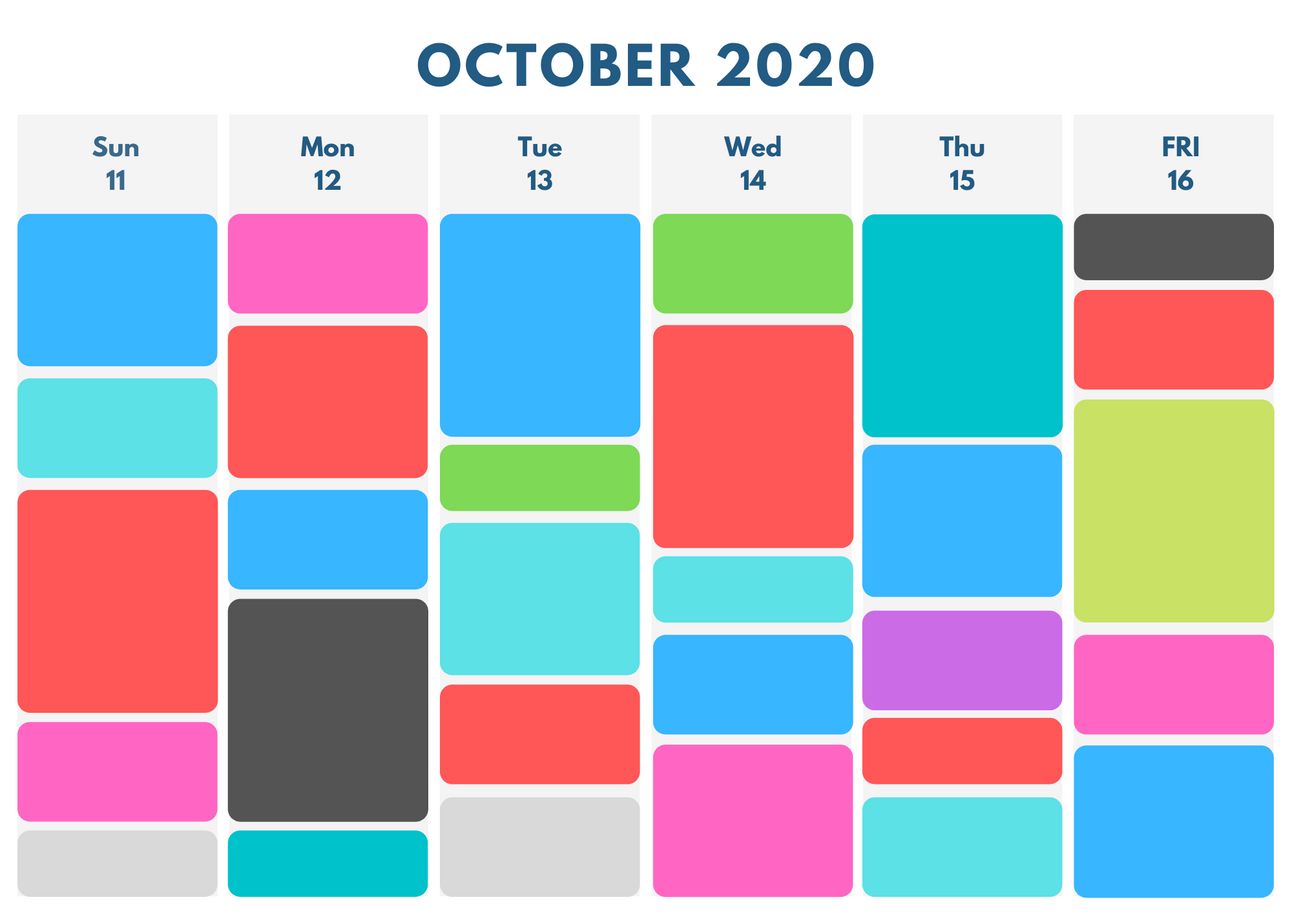
A calendar should not look this full. Leave some space for when you get sidetracked.
Also, be realistic. You can only get so much high-quality work done in a day. So, mix in some moderate and low-importance tasks to give your mind the space for the really critical stuff. Here's the unfortunate truth: no matter how well you plan your day, no matter how well you set your priorities, and no matter how well-intentioned you are, you will eventually slip up. You'll get distracted or have to deal with some unforeseen events, and your schedule is just going to go right out the window.
Enjoying Insight Bites? The first 100,000 people that click this link can share it with a friend free of charge. (Don't like Insight Bites? Afflict it on an enemy! We'll appreciate you either way.)
The key here is not to get discouraged when that happens. Instead, you want to build a few recovery mechanisms into your day so that when you do get knocked off course, you can quickly get back on track. For example, I have a "2-to-Do" list that I mentioned earlier. If I miss a few things during my morning routine or something sidetracks me and throws off my schedule, I can jump back into work by tackling some low-importance, quick-win tasks from my 2-to-Do list. This helps me feel like I'm making progress and not dwelling on the things I missed.
TOMMORROW LIST
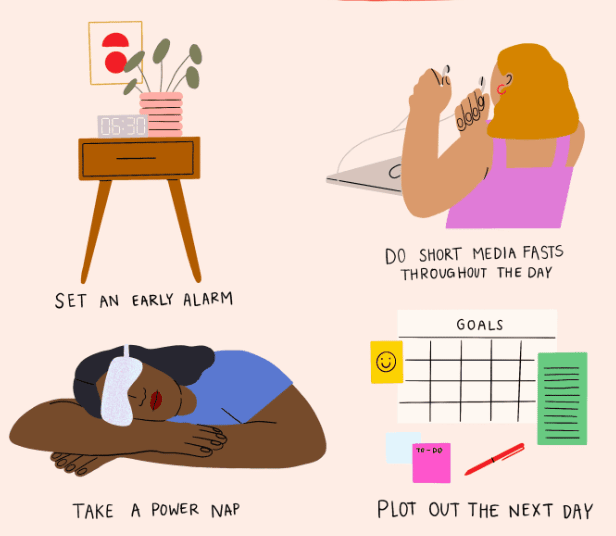
Another thing I do is I keep a "tomorrow" list. At the end of each day, I jot down the most important tasks I need to tackle the following morning. This way, I have a clear plan to jump into the next day, even if I got derailed the previous evening.
In essence, time blocking gives you an actionable framework for getting the most important things done each day. It takes discipline, but it's incredibly effective. But to be a millionaire or simply be highly productive, you've got to master your calendar and prioritize your tasks.
KEY TAKEAWAYS
Use implementation intention in combination to your goals to increase your effectiveness
Manage your priorities; make a list (5 to thrive, 3 to free, 2 to do)
Use Time Blocking to plan out your day; it runs a lot smoother this way.